


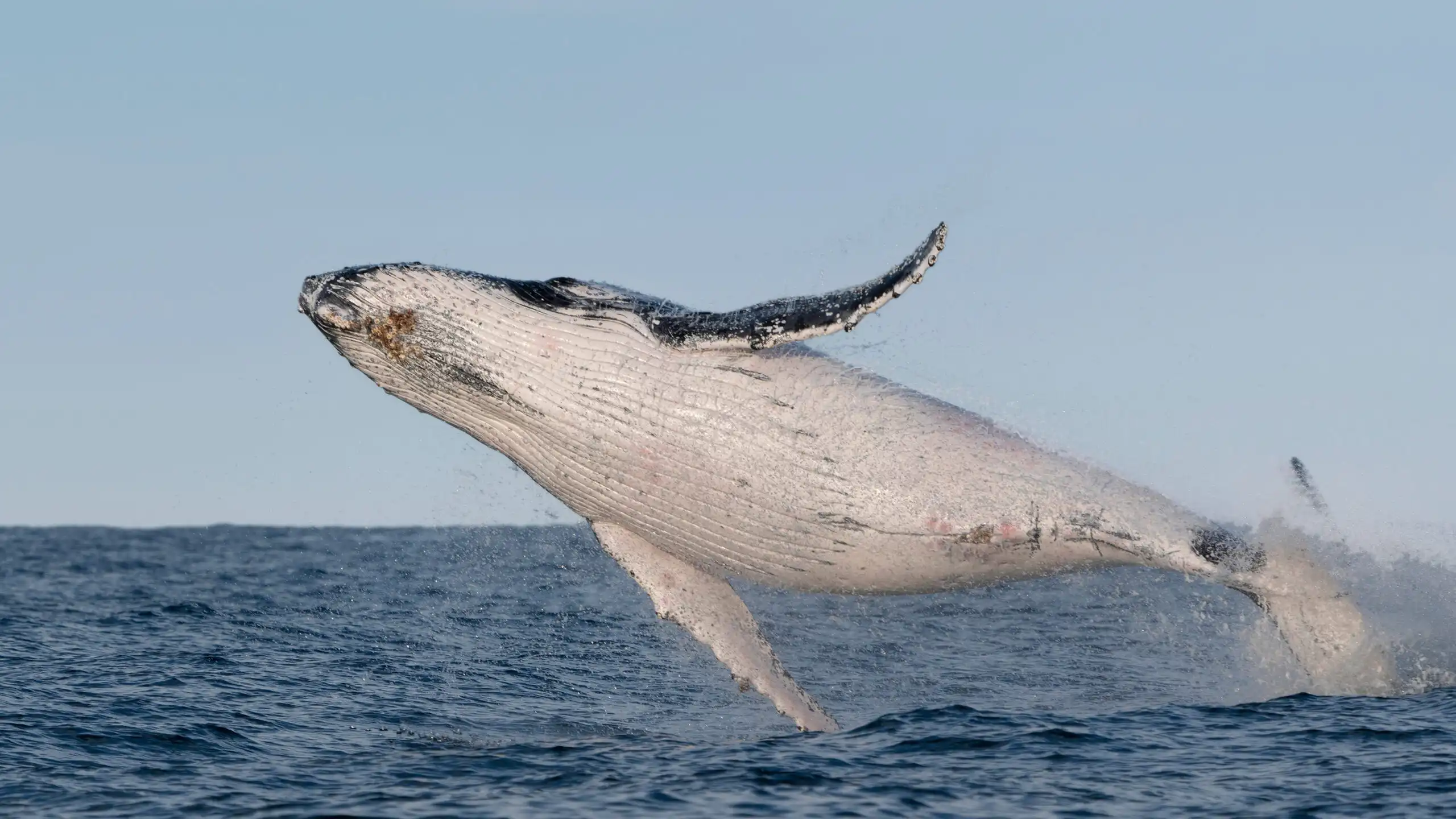
From mid-May onward, humpback whales travel north along the New South Wales coast on one of nature’s most reliable spectacles. Whale watching on the Barrington Coast is a land-based experience: three headland lookouts within 30 minutes of Pacific Palms put you directly in line with the migration route. Cape Hawke, Charlotte Head, and Sugarloaf Point lighthouse are the picks, and May is the time to go before the peak June and July crowds arrive.
Why the Barrington Coast Is One of NSW’s Best Land-Based Whale Watching Spots
The Mid North Coast headlands here sit high above the water, unobstructed, and on most days you’ll share the view with only a handful of other people. No seasickness, no ticket. You bring a thermos, find your patch of grass near the cliff edge, and wait.
Humpbacks follow a well-established route that runs close to shore here. May marks the start of the northern migration, when whales head from Antarctic feeding grounds toward warmer calving waters off Queensland. The peak window is June and July, but May has the advantage of quieter headlands and the thrill of catching the first whales of the season. Sightings in May are often spectacular: the whales are actively travelling, which means more breaches, tail slaps, and the unmistakable blow of a surfacing whale.
Bring binoculars, preferably 8x or 10x. A one-hour vigil on a clear day will generally deliver at least one sighting during peak migration.
Cape Hawke: The Closest Lookout to Elizabeth Beach
Cape Hawke is the closest vantage point to Shores Elizabeth Beach, sitting inside Booti Booti National Park roughly 15 to 20 minutes south of Pacific Palms. The lookout sits at around 180 metres above sea level with sweeping views north and south along the coast.
The walk takes 30 to 40 minutes return from the carpark at the end of Cape Hawke Drive. It’s a moderate bush track through coastal scrub that opens at the top to views from Forster in the south to the lakes and beaches of Pacific Palms in the north. The elevation gives genuine line-of-sight across the migration corridor.
No facilities at the summit beyond the lookout platform, so bring water. The carpark is free. Early morning is the calmest time for sightings: the sea surface is smoother and distant blows are easier to spot before you see the whale itself.
Our Barrington Coast guide covers more of what the region offers if you want to build a fuller day around Cape Hawke.
Charlotte Head: A Quieter Alternative Worth the Short Drive
Charlotte Head sits on the southern edge of Seal Rocks, about 25 to 30 minutes from Pacific Palms. It’s a lower headland than Cape Hawke, but the position directly at the tip puts you within striking distance of the migration corridor, and the whale watching here is consistently good.
The track from the Seal Rocks carpark takes around 15 minutes return, passing through coastal heath before opening to a rocky headland with unobstructed Pacific views. On a still morning, you can hear the whales before you see them: the hollow exhale of a humpback surfacing offshore carries clearly in calm conditions.
Charlotte Head also sees southern right whales from late May and through June, sometimes coming closer inshore than the humpbacks. Combining Charlotte Head with lunch in Seal Rocks village makes for a complete morning outing.
Sugarloaf Point Lighthouse: History and Whales in One Stop
Sugarloaf Point lighthouse sits roughly 30 minutes south of Pacific Palms, near Seal Rocks, and remains one of the most striking coastal landmarks on the Barrington Coast. The lighthouse is operational, the grounds are open to visitors, and the headland position directly overlooks the migration route with excellent whale activity from May through to August.
The vantage point here is different from Cape Hawke and Charlotte Head: you’re watching from beside an active lighthouse on a rocky point, which adds a particular atmosphere. Humpbacks breach close enough on some days that the activity is visible without binoculars, though you’ll still want them for most sightings.
Entry is free. Opening hours are sunrise to sunset. The walk from the carpark to the lighthouse point takes around 20 minutes on easy ground. Combine this with Charlotte Head since both are within 10 minutes of each other at Seal Rocks.
Frequently Asked Questions About Whale Watching Near Pacific Palms
When is the best time to see whales from the Barrington Coast?
The northern migration runs from mid-May through August, with peak activity in June and July. May is the earliest reliable window and tends to be quieter at the lookouts.
What species of whale will I see?
Humpback whales are the main species, with southern right whales also appearing from late May onward, often coming closer inshore.
Do I need binoculars?
They improve the experience significantly. 8x or 10x magnification is plenty. Most sightings are at distance; some days at Sugarloaf Point the naked eye is enough, but take them regardless.
Is there a fee to access the lookouts?
No entry fees for Cape Hawke lookout, Charlotte Head, or Sugarloaf Point lighthouse grounds. The Cape Hawke carpark off Cape Hawke Drive is free.
How long should I allow at each spot?
At least one hour. The first sighting usually prompts you to stay longer. For Cape Hawke, allow a half-morning: 40 minutes each way plus an hour watching.
Planning Your Morning from Shores Elizabeth Beach
The villas are set between Elizabeth Beach and Wallis Lake, which puts you within easy reach of all three headlands. Cape Hawke is 15 to 20 minutes south; Charlotte Head and Sugarloaf Point are 25 to 30 minutes. The natural approach for a May morning is Cape Hawke at dawn, then on to Seal Rocks to take in Charlotte Head and the lighthouse before lunch in the village.
Our villas have full kitchens, so an early departure is straightforward. You eat on your own schedule, leave when the light is right, and come back when you’re ready. May mornings here are cool and often still, with clear sea conditions that make the ocean surface easy to read from height.
The migration passes this section of coast every year. The villas are 10 minutes from Cape Hawke, and the Pacific in front of Elizabeth Beach is the same corridor those whales are moving through.
Check availability at Shores Elizabeth Beach.
Image credit: Amaroo Cruises Forster / Destination NSW